

The rise of a zero-sum mindset, where someone’s gain is another person’s loss, is a pressing modern challenge. While zero-sum has ancient roots, its contemporary amplification is shaped by a century of Scientific Management.
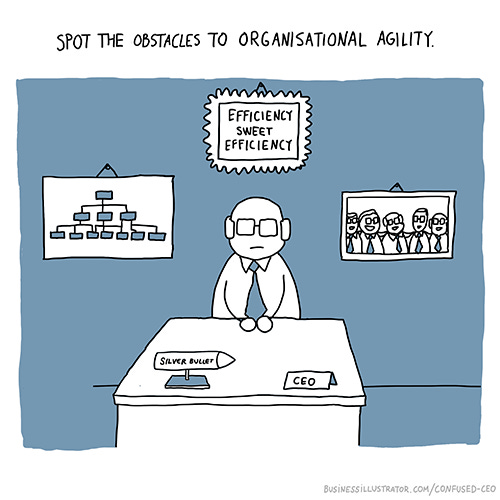
Frederick Winslow Taylor’s vision treated organizational processes as mechanistic systems, optimising individual components for maximum output. This “scientific” engineering, despite its misapplication to human systems, gained immense traction for its simplicity, quick results, and promise of a “one best way.”
Yet, its critical flaw lies in its failure within complex adaptive systems. Here, the “whole” is far more than the sum of its parts, driven by emergent properties and human agency. Taylorism’s reductionist approach frequently leads to suboptimal outcomes.
This is where it aligns with a zero-sum mindset. Both impose “restricted boundaries” and “locked-down parameters,” implying finite resources and predetermined outcomes. Both also foster “limited autonomy”. When roles are rigidly defined and resources appear top-down, it’s easy to perceive another’s gain as one’s own pain, or efficiency being at the expense of worker well-being.
A cultural preference for oversimplified fixes has been systemically reinforced by Tayloristic management principles, education, and policy, It has bred impatience with complexity, externalities, and the challenges of truly adaptive systems.
Thus, while a zero-sum mindset predates the industrial revolution, Scientific Management’s enduring legacy has skewed our worldview, making us more prone to seeing a world of winners and losers, rather than one rich with collaborative, positive-sum potential.