

By Lily Kozlowska
Marta inherited her grandmother’s garden and almost killed it with kindness.
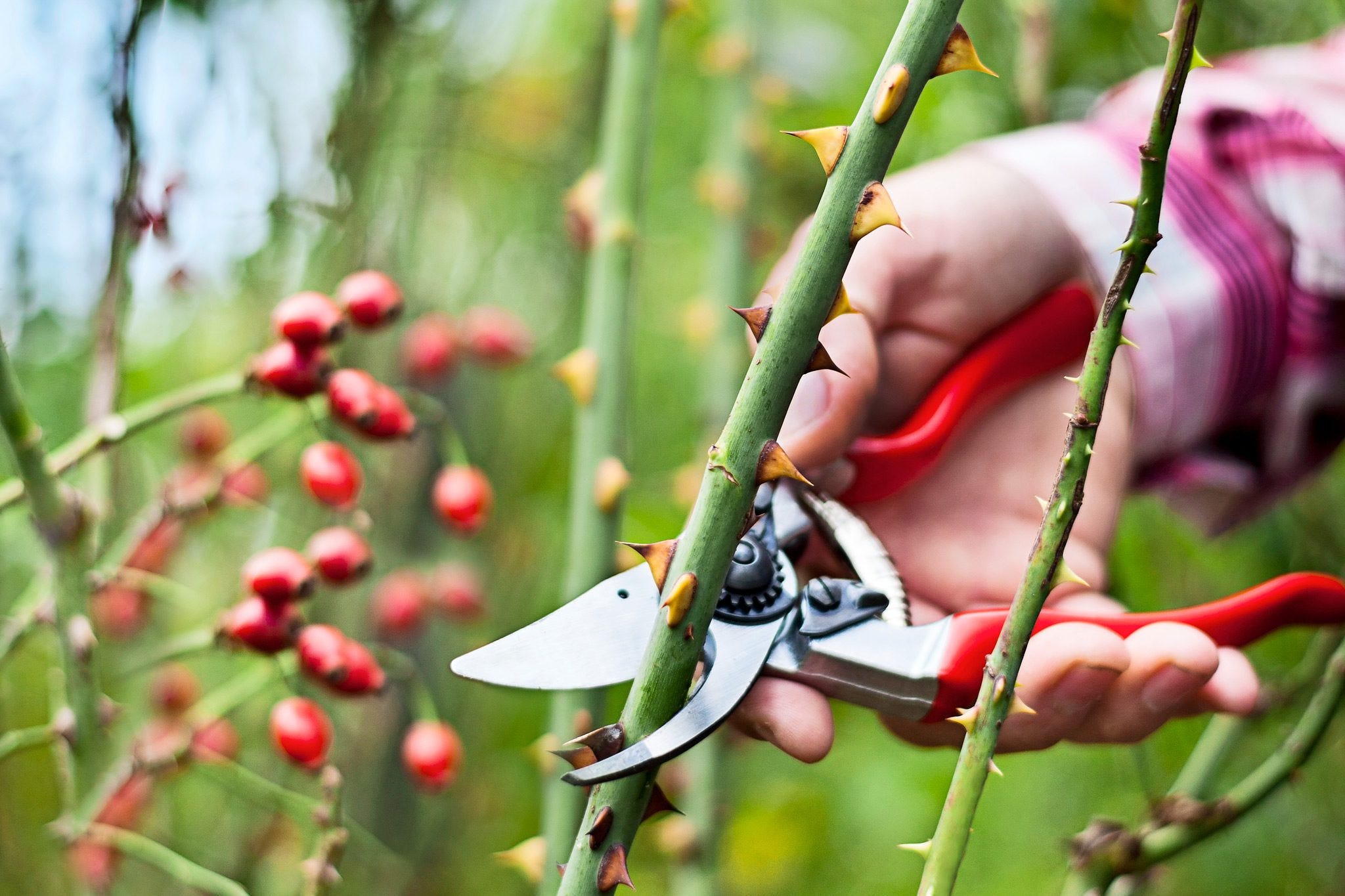
She could not bring herself to cut anything. Every branch had grown for a reason, and cutting felt like punishment, like telling a living thing it had done something wrong. So, she let it all stay, and slowly the roses stopped flowering and the fruit trees grew long, leafy branches that never gave any fruit. The plant was using all its energy just to grow bigger, and had nothing left to actually flower.
An old neighbour watched this for a season, then handed her a pair of garden scissors and said something she did not expect. You are not cutting the plant back, he told her, you are choosing where it goes next.
Rejection works in much the same way, though almost nobody describes it kindly while it is happening.
We are told, endlessly, that rejection is redirection. It is written on posts and repeated at every conference, and it is not wrong, exactly, but hearing it in the middle of a fresh rejection is almost unbearable, because it arrives calm and tidy at the exact moment you don’t feel that way at all. I think it feels comforting because it leaves the person out of it, but pruning is never that easy, because you are always cutting something that is still alive.
Here is the part the phrase leaves out. A gardener does not cut the weak branches because they are worthless, and often the ones they cut are perfectly healthy. The branch being removed has done nothing wrong; it has simply grown in a direction the whole plant cannot afford to keep feeding, so the cut is not really about the branch at all, but a decision about the shape of the thing that remains.
That reframing matters, because most of us experience rejection as a judgement on our worth: not good enough, not wanted, not chosen. But a great deal of what gets cut in a life is cut for reasons that have almost nothing to do with the quality of the person. Timing, the season, the shape someone else is trying to grow into, the wall inside a company that has been there far longer than you have. You can be a strong, healthy branch and still find yourself growing where the plant simply cannot follow.
There is a harder truth folded into this, and it is worth being honest about it. Sometimes the cut is fair, and sometimes we are genuinely not ready, not yet grown into the thing we were reaching for, stretching for light we have not grown tall enough to hold. That is not an insult either, because a plant that is never pruned stays small and tangled and safe, and growth in one direction almost always asks us to lose something in another. Nobody blooms in every direction at once.
The mistake is not being pruned. The mistake is Marta’s first instinct, the refusal to let anything be cut at all, staying big and busy and “unbloomed” because loss of any kind feels like failure. The people who handle rejection well are not the ones who feel it less, but the ones who understand that a cut is information about direction, not a sentence passed on their value.
What a good gardener never does is decide, after one hard winter, that the plant is finished. They wait and watch where the new growth actually wants to go, and the following season, more often than not, the thing flowers exactly where the cut was made.
The branch does not get to see that in the moment it is removed, and neither do we. That is the whole difficulty of it, and also the whole point.
Very nicely expressed Lily and a great analogy