

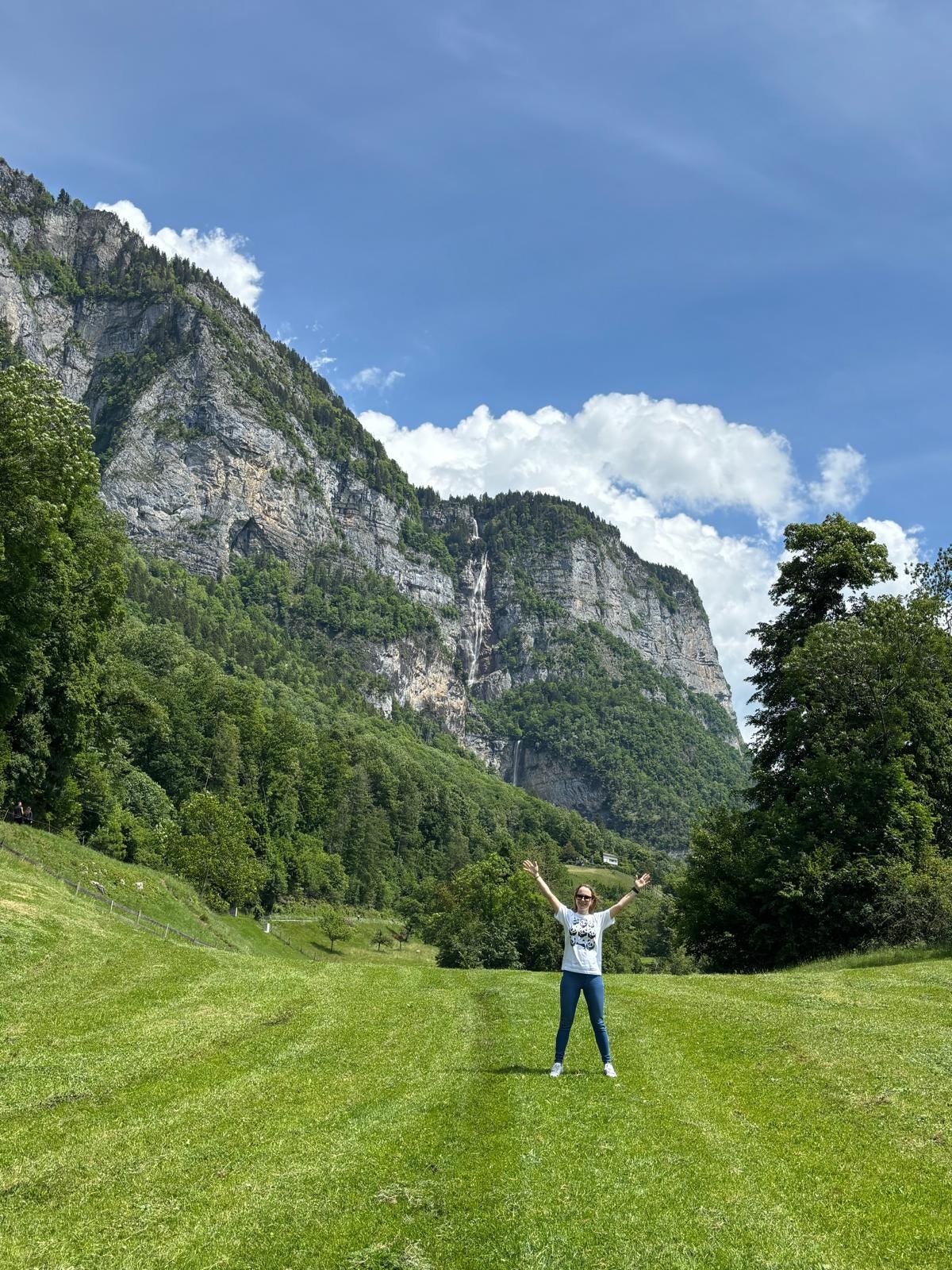
Anna grew up hiking. Guided trails. Coloured signs at every fork. A map you could fold into your pocket and trust. The point of hiking was the walk itself: pack light, move fast, arrive on time.
Then one summer, a friend took her up something that wasn’t a hike. The route was a suggestion rather than a path. The weather forecast was three hours old and already wrong. Halfway up, two groups ahead of them turned back without saying why. Her friend stopped, looked at the sky, looked at the snow, and said: “We go on, but slowly. And if the wind shifts, we come down.” Anna remembers thinking: nobody on a hike ever talks like this.
Mountaineering exists because hiking runs out. The trails go as far as the trails go, and beyond them the ground doesn’t follow rules. People invented a different discipline for that ground. Different equipment, different pace, different way of making decisions.
Most companies are still organized for the hike.
The trails were drawn in a different era. From the late 1990s until roughly 2019, the global business environment behaved like a guided path. Trade opened up in one direction. Interest rates fell in one direction. Globalization was treated as a one-way assumption, and supply chains were designed accordingly. The cheapest unit cost. The longest lead time the market would tolerate. The leanest inventory the balance sheet would reward. Long-range planning shrank because the future looked enough like the past that planning for divergence felt expensive.
Then the path ended. Not dramatically. In stages. COVID. Ukraine. Inflation. The Red Sea. A US tariff cycle that doesn’t follow the political logic anyone studied at business school. Middle East escalation. Each event arrived before the previous one played out. The recovery time of supply chains was longer than the gap between shocks. That is the actual change. Not that crises happen, but that they no longer leave room to recover between them.
Markets noticed first. Commodity prices that used to track supply and demand now move on what people think will happen, on political signals, on the noise around them. A buyer signing a procurement contract today is quietly betting on geopolitics, on regulation, on shipping routes that worked last year and may not next year. Most contracts and most teams were not designed for that bet.
You can see it in the shape of agreements. The classic three-to-five year fixed-price contract is quietly disappearing. What’s replacing it is either short and frequently renegotiated, which pushes risk onto whoever happens to be weaker that quarter, or long and loaded with indexation, expanded force majeure, geopolitical exceptions, ESG riders. The middle has gone empty. Suppliers and buyers both know that anything written today will be tested by something nobody has named yet.
Everyone in the industry says supply chain has to become “proactive” now. The word appears in every conference and every report. Proactive means carrying inventory the P&L doesn’t want to fund. Proactive means multi-sourcing at higher unit cost. Proactive means hiring for capability that can’t be justified on this quarter’s numbers. Most companies talk proactive and budget reactive, and the gap between the two is where shocks land hardest.
This is where AI usually enters the conversation. It accelerates analysis, finds patterns, compresses tasks that used to take weeks. That is a real and welcome shift. But it is not a panacea for an environment where the correct decision changes weekly. On the trail, the question was speed. On the mountain, the question is judgement. Knowing when to push, when to wait, when conditions look fine but feel wrong. Judgement is a property of people. It develops slowly, under pressure, in environments that allow it to develop.
The companies that handle the next decade well will not be the ones with the most sophisticated tools. They will be the ones with people who can read conditions, take ownership of decisions that don’t have clean numbers behind them, and communicate across functions without waiting for permission. Sales talking to procurement before the contract is signed. Procurement talking to operations before the volume commitment is locked. Finance staying in the room when the resilience trade-off is being made. Internal misalignment used to be inefficient. Today it is unacceptable. The companies that still tolerate it are quietly losing ground, even if their numbers haven’t caught up yet.
The same logic applies outside the company. Trust used to be a soft skill. It has become a competitive advantage. The companies that share forecasts honestly with suppliers, share roadmaps with customers, and share early warnings across the chain end up with better information when capacity tightens. The companies that keep information to themselves end up paying spot prices in the next shock and wondering why nobody warned them. There is no neutral position on this. The more inward-looking the company, the harder the shift becomes.
The destination hasn’t changed. Customers still need product. Companies still need to deliver it. What has changed is the ground between here and there.
What mountaineers do on that ground is not a mystery. They rope together. They talk to each other constantly. They agree before the climb on what would make them turn back. None of that looks impressive in a photo. It is also why they make it home.
The companies that arrive next will be the ones that learn it.
