

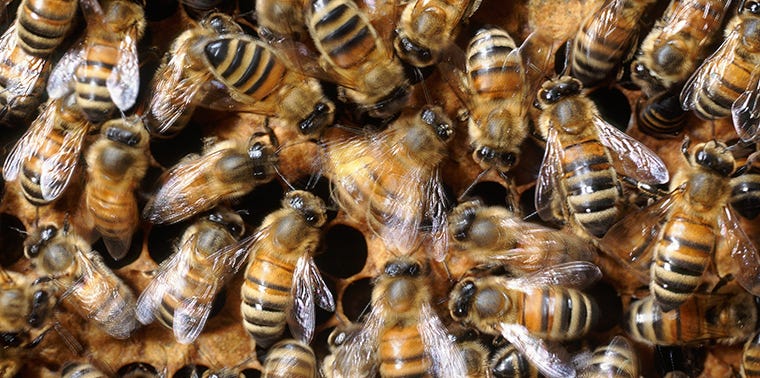
Decision-makers are over-rated. Organizations are shaped by distributed intelligence more than by direction. Formal decisions are mostly recognition of the inevitable, or continuations of a trend. Organizational change; investment decisions; technology upgrade; and cost-reduction: not outcomes of heroic board-room decisions, but evolved and active before executive approval, reflecting the way people already work - responding to market demand, maintaining technical competence and avoiding cost erosion.
There is a persistent image of a leader as someone who decides and whom others follow. This is because our memories record decision-points as consequential moments and those who make them as the arbiters of destiny. We remember the theatre of decision-making, and celebrate its main actors.
We don’t see the evolution that enabled and guided it. We miss the internal influencers who process the organization’s collective intelligence. They are the real power, even when unaware of their own agency. They may not realize why they are so often asked for their opinion. They are modest about their ability to draft a board paper that helps decision-makers to get to the ‘right’ answer. Without them, there is nothing to decide on; no proposal; no direction; no comprehension; no implementation. Internal influencers shape what gets approved. The organization is there long before the executive decision-maker.
The number of influencers varies by organization. Sometimes it is a tiny minority, but organizations with an open culture and low staff-turnover may have many. Their impact may be hard to see. It’s business as usual; the messy emergence of ideas; shared understandings; spontaneous concern about progress; running adjustments to a process. Mundane, prosaic, quotidian. Not the heroic stuff of real decision makers. But without internal influencers, there is no organization.
This is the Hivemind. It’s a term that has been used synonymously with groupthink, crowd wisdom and collective intelligence, but what does it mean and how relevant is it, in business and social contexts?
It is the theme of the next SWISSUES Forvm event on Thursday 2nd July at 18:00 CET
Want to learn more?
Here is a list of sources to get you started.
Derek Sivers, How to Start a Movement
A single dancer at a music festival becomes a movement in under three minutes. Sivers argues that it is the first follower, not the leader, who transforms a lone individual into something collective. Widely known; worth watching again with hivemind in mind.
TED Video, 3 minutes:
Thomas Seeley, Honeybee Decision Making
Seeley’s research shows how bee swarms choose a new nest site through competing advocates, inhibition signals, and quorum thresholds — a process closer to structured debate than instinct.
YouTube Video, 9 minutes:
Thomas Seeley, Honeybee Democracy
The full scientific account of how honeybee swarms make collective decisions about where to live. Seeley draws explicit parallels to human decision-making groups, and concludes that good collective decisions require shared interests, minimized leader influence, genuine debate, and diverse options.
Book description: https://press.princeton.edu/books/hardcover/9780691147215/honeybee-democracy?srsltid=AfmBOorxZWDLiB9VLf8CSZ-k5bLmF0UidUsidxrlqo7YZTHpeSBJCg35
James Surowiecki, The Wisdom of Crowds (2004)
The foundational popular text on collective intelligence. Starting from Francis Galton’s 1906 discovery that a crowd at a livestock fair guessed an ox’s weight almost exactly, Surowiecki argues that diverse, independent groups reliably outperform individual experts — under the right conditions. The conditions matter as much as the thesis.
Book description: https://en.wikipedia.org/wiki/The_Wisdom_of_Crowds
Lars Chittka, The Mind of a Bee (Princeton, 2022)
A direct challenge to the hivemind caricature: individual bees have distinct personalities, can learn by observation, count, use simple tools, and may possess rudimentary consciousness. The collective intelligence of the hive turns out to rest on something richer at the node level than anyone expected.
Book description: https://press.princeton.edu/books/paperback/9780691253893/the-mind-of-a-bee?srsltid=AfmBOooQMkESlIPrGVlsZ1Q4ljlPPTyZwHtdEM7qkFMb75hxeDRZIxTZ
Robert Cialdini, Influence: Science and Practice (1984)
The canonical account of why people comply, conform, and copy. His concept of social proof is probably the most direct behavioural economics entry point into hivemind dynamics. Most people in business will have encountered this; fewer will have thought of it in this context.
Book description: https://www.amazon.com/Influence-Practice-Robert-B-Cialdini/dp/0205609996
Irving L Janis, Groupthink
When the hivemind goes wrong. This is the the original study of how cohesive groups — including Kennedy’s advisors during the Bay of Pigs — make catastrophically bad decisions by suppressing internal dissent. The dark side of collective intelligence.
Original MIT summary – Readings in Managerial Psychology: https://web.mit.edu/curhan/www/docs/Articles/15341_Readings/Group_Dynamics/Janis_Groupthink.pdf