

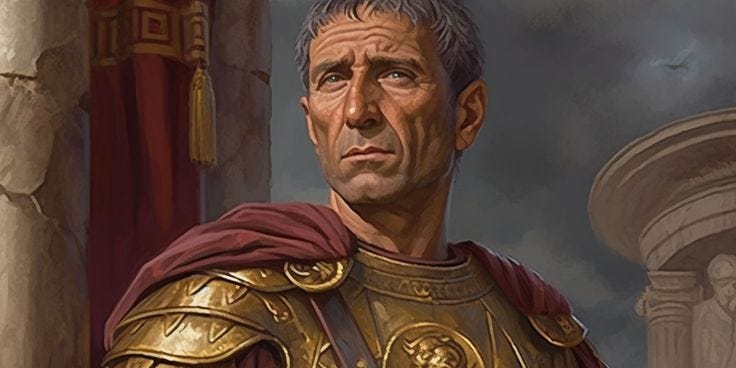
“Aerial defenses will be knocked out in four days and, if they refuse our terms, we will destroy their whole offensive air capability and its infrastructure base in less than four weeks.” asserted the deputy commander-in-chief. He was boasting to his boss, the head of state.
The attack did not go to plan.
The deputy was clever but he was drug-addled and lazy. And he ignored the maxim of one of his predecessors, “No plan survives the first encounter with the enemy“.
The enemy in this case saw the folly of massed confrontation and chose instead to raid selected targets on which it could inflict most damage with least loss. It is not a new strategy and is typically employed defensively. It avoids direct conflict and pitched battles and has the aim of wearing down a stronger opponent gradually. The aim is to manage resources, turn time into a weapon against the invader, and define success as the avoidance of defeat.
There are many examples of the strategy through history, the first documented by Quintus Fabius Maximus1 in his harassment of Hannibal’s army during the Carthaginian wars (218BC-201BC). The Fabian strategy still bears his name and is drilled into military strategists from Day 1 of training. Politicians however, under pressure to produce quick and performative results, can never learn it. They are told what they want to hear about military superiority in numbers and technology, about the foe’s low morale, and about the enemy commanders’ willingness for a settlement. Political leaders need equanimity in order to make decisions so they select a supportive cabinet and advisors to withstand the opinions of experts.
The quote at the start is, of course, Generalfeldmarschall Hermann Goering’s advice to Reichskanzler Adolf Hitler ahead of the attack on British air bases on Adlertag (Eagle Day), 13th August 1940.
Who else…?
Britain’s Air Chief Marshal Dowding had prepared for that day. He knew the Luftwaffe’s superiority in numbers so he focused on the possible. He refused to give up aircraft to defend France. He resisted pressure from colleagues, to confront attackers en masse. He gave orders for engagement to be at the extreme of the enemy’s range when they had least fighter cover, even though it put London at risk. He had commissioned early warning radar to see raiding squadrons forming for attack. And he had developed a completely new form of command. The real-time integration of early warning radars, human spotters, and regional operational control with central coordination, unique then, would be familiar to any modern commander.
It was Helmuth von Moltke who said, “No plan survives the first encounter with the enemy“. He did NOT say you could ever discount the enemy’s resources or the need for intelligence and preparation.
Pictured
The point of SWISSUES is to be less than obvious.
I hope readers saw the not-so-subtle reference to Pete Hegseth...